Cross-Timezone Effects on Accumulator Modifications Within International Sports Betting Arenas

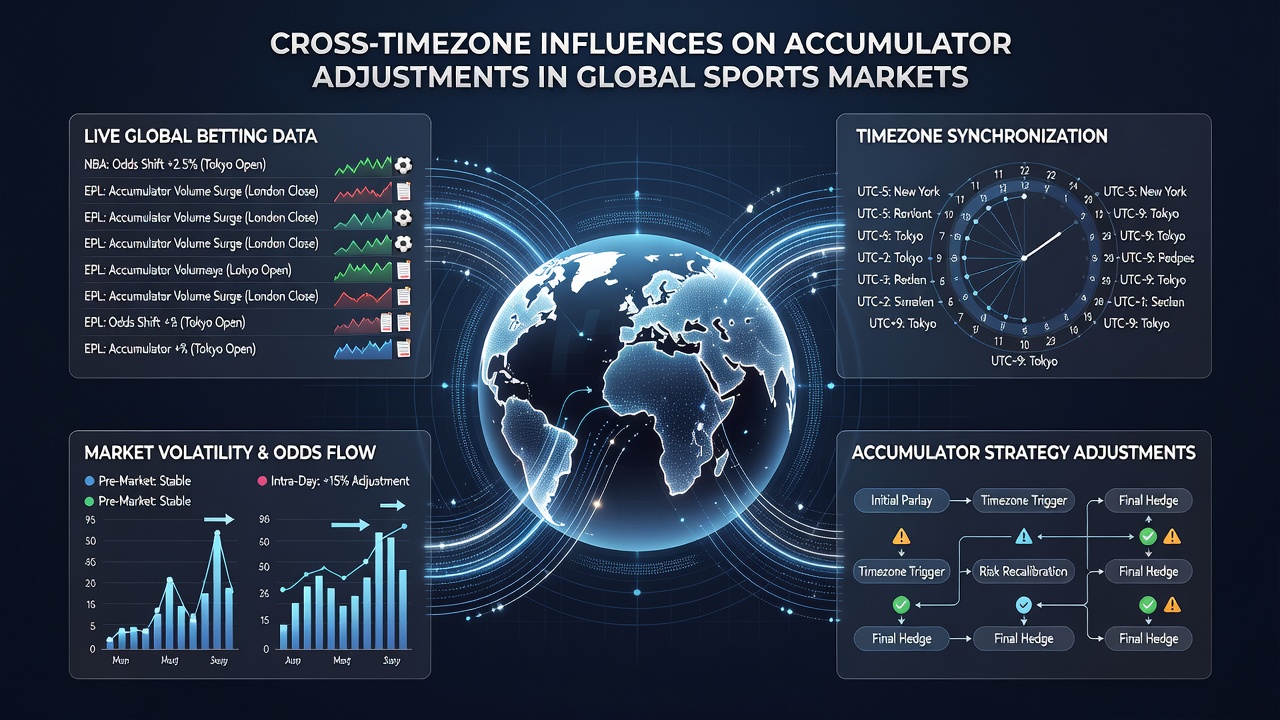
Global sports markets operate continuously across multiple time zones, and accumulator bets that combine selections from events in Asia, Europe, and the Americas require constant modifications to reflect incoming results and liquidity shifts. Bookmakers adjust these multi-leg wagers in real time as games conclude in one region while others remain live elsewhere, creating layered pricing dynamics that depend on precise coordination of event schedules and data feeds. Observers note that a completed NBA game in the Pacific time zone can immediately influence the payout structure of an accumulator that still includes an ongoing Premier League match in the United Kingdom and a cricket fixture in Australia.
How Event Timing Drives Pricing Updates
Accumulators spanning different continents experience sequential updates because each leg resolves according to its local schedule rather than a single unified clock. When an Asian football match finishes at 3 a.m. Eastern Time, operators recalculate the remaining legs using revised probabilities that incorporate the confirmed outcome, and these changes propagate instantly to markets in other regions still accepting wagers. Data from regulatory filings show that such adjustments occur thousands of times daily during peak overlap periods, particularly when North American evening fixtures coincide with early European morning sessions. Those who monitor global platforms report that software systems flag accumulator tickets for automatic repricing once any single leg reaches a final result, preventing stale odds from remaining available.
Regional Regulatory Frameworks and Market Coordination
Authorities in different jurisdictions maintain distinct rules on how operators must handle live accumulator modifications. The Alcohol and Gaming Commission of Ontario requires licensed platforms to document every pricing change triggered by cross-zone results, ensuring transparency for bettors whose selections span multiple continents. Similar oversight exists in Australia through state gaming bodies that track how time differences affect settlement processes for multi-sport accumulators. These requirements have become especially relevant as operators prepare systems for expanded international calendars expected in July 2026, when several major tournaments will feature overlapping schedules across at least five time zones.
Technology Enabling Real-Time Modifications
Modern betting platforms rely on synchronized data streams that deliver scores and statistics within seconds of official confirmation, allowing accumulator engines to recalculate odds without manual intervention. When a tennis match in Melbourne concludes, the system immediately applies the outcome to any open tickets that include that leg alongside selections from later events in other regions. Industry reports from the European Gaming and Betting Association indicate that latency between data receipt and price update now averages under three seconds for major operators, reducing the window during which outdated accumulator values remain visible. This speed matters most during high-volume periods when events in the Americas finish while Asian markets open for the next day's fixtures.
Examples of Accumulator Adjustments Across Zones
One documented pattern involves NBA playoff games ending after midnight in Europe, prompting immediate downward adjustments to accumulators that paired those results with early-morning horse racing events in Australia. Operators must also account for daylight-saving transitions that temporarily alter the gap between North American and European schedules, shifting the order in which legs resolve and therefore the timing of repricing events. Research compiled by academic groups studying digital wagering markets shows that these temporal shifts produce measurable spikes in modification frequency during March and November when clocks change in multiple regions simultaneously.
Future Developments in July 2026
Preparations for July 2026 include testing accumulator systems against projected schedule overlaps from expanded international competitions. Operators are evaluating how additional events in emerging markets will interact with existing time-zone patterns, particularly when selections from South American leagues combine with North American and Asian fixtures. Regulatory bodies in multiple jurisdictions have requested advance documentation of adjustment protocols to verify compliance ahead of these expanded calendars.
Conclusion
Cross-timezone accumulator adjustments represent a core operational function in global sports markets, driven by the sequential resolution of events across continents and supported by regulatory standards plus rapid data technology. Platforms continue refining these processes to maintain accuracy as international schedules grow more complex through 2026 and beyond.