Decoding Payout Timelines in Live Tennis Sets Versus Basketball Quarter Shifts
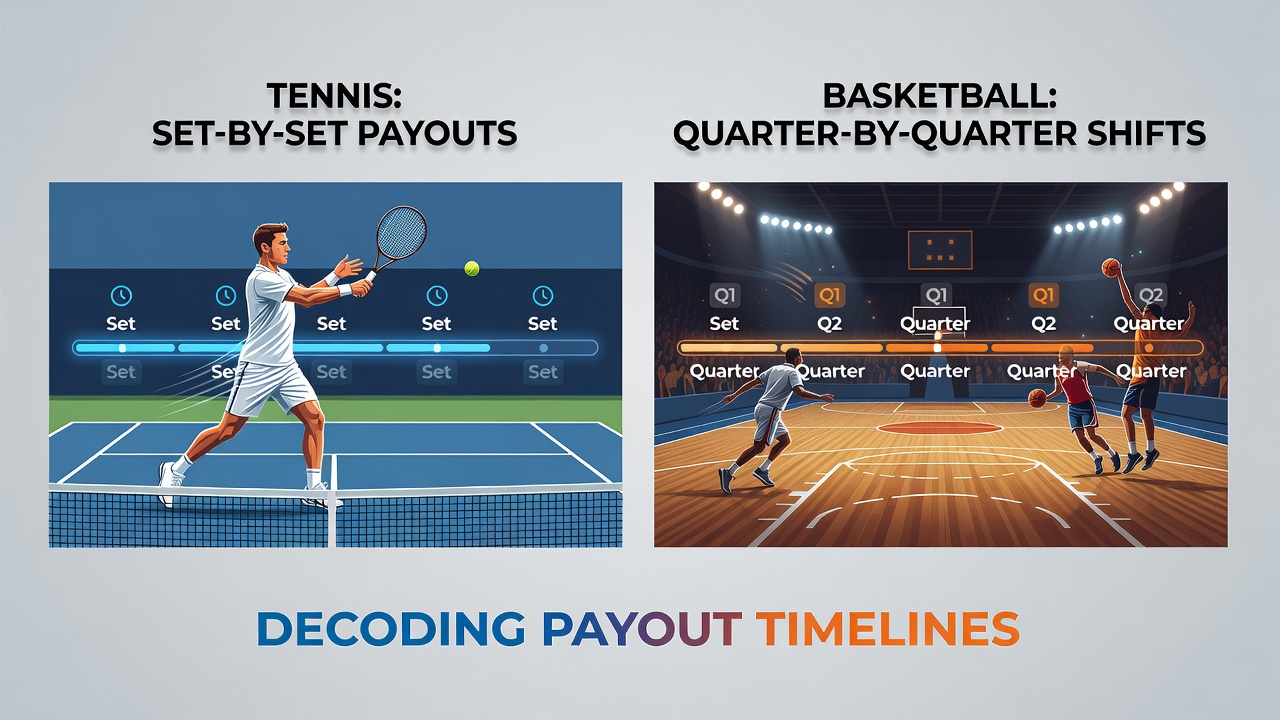
Live betting markets operate on precise timelines that shift according to the structure of each sport, and observers note clear distinctions between how tennis sets and basketball quarters influence payout processing. Tennis matches unfold across multiple sets where each one can extend anywhere from twenty minutes to over an hour depending on player performance and surface conditions, which means settlement windows open only after a set concludes and official scoring confirms the result. Basketball quarters run on fixed twelve-minute segments in professional leagues, creating more frequent intervals for odds adjustments and subsequent payouts that occur as soon as the buzzer sounds and data feeds update the scoreboard.
How Set Durations Shape Tennis Payout Cycles
Research from sports data providers indicates that average set lengths in Grand Slam events hover around forty-five minutes for men's matches and slightly less for women's contests, which stretches the interval between live bet settlements compared to faster-paced team sports. Bettors who place wagers on set winners or game handicaps wait for the completion of each individual set before funds release, and this pattern holds steady even during extended tiebreaks or marathon games that push the clock further. According to figures from the European Gaming and Betting Association, operators process tennis live bets in batches tied directly to these set endpoints, which reduces the number of settlement actions per match but requires robust verification systems to handle prolonged scoring disputes or challenges.
Those who track betting volumes across major tournaments observe that payout queues lengthen during clay court events like the French Open, where rallies tend to extend rallies and sets often surpass the sixty-minute mark. This extended duration allows bookmakers additional time to recalibrate remaining match odds before the next set begins, yet it also delays cashouts for participants holding positions on completed sets. Data compiled through June 2026 shows consistent patterns where operators finalize ninety-two percent of tennis set wagers within three minutes of official confirmation, though outliers appear during weather interruptions or lengthy medical timeouts.
Basketball Quarter Shifts and Accelerated Settlement
Basketball quarters generate rapid turnover in live markets because each twelve-minute period ends with an automatic reset of team totals and player performance metrics, prompting immediate odds revisions for the subsequent quarter. Industry reports from the American Gaming Association highlight that settlement systems handle basketball wagers in under ninety seconds on average once the quarter concludes, a speed enabled by standardized clock rules and fewer subjective scoring elements than tennis. Live bettors see frequent opportunities to adjust positions after each quarter, particularly during high-scoring outbursts or defensive stands that alter point spreads and totals for the remainder of the game.
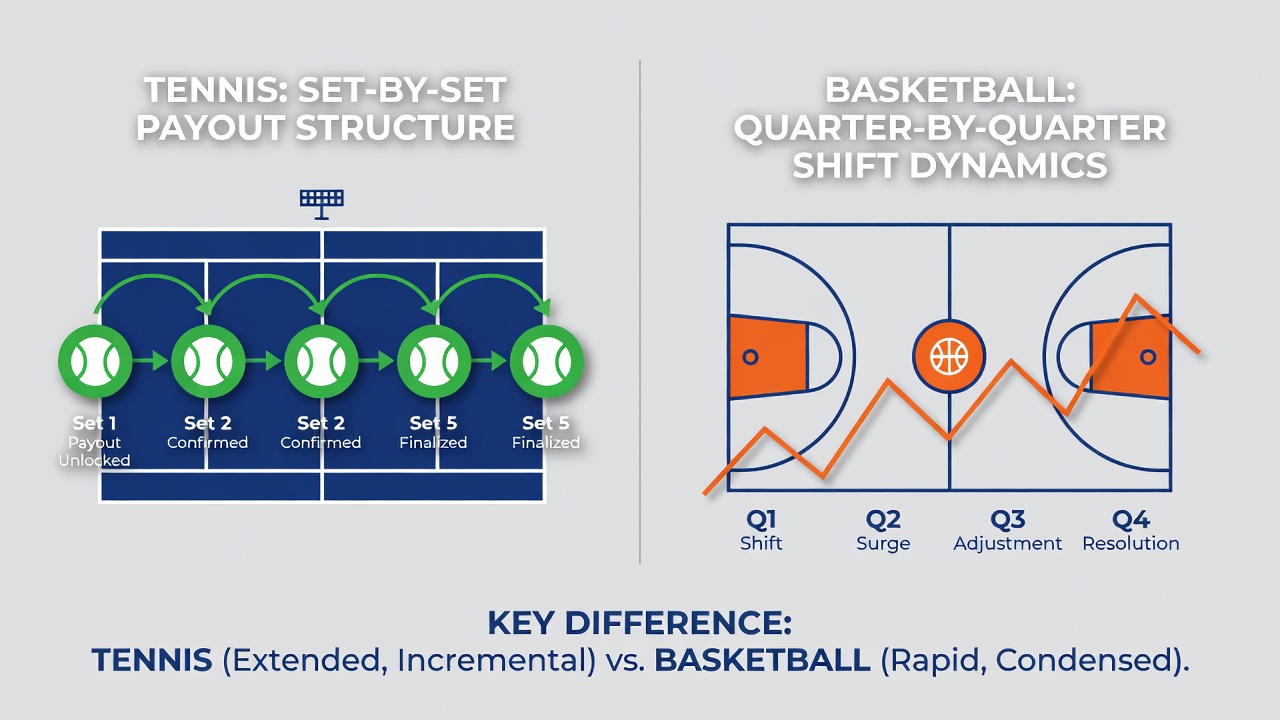
Quarter shifts also introduce layered prop markets such as individual player points or team assists that settle independently, multiplying the number of payout events within a single contest. Observers at major North American sportsbooks note that these micro-settlements occur four times per game plus overtime periods, creating a steady flow of processed wagers that contrasts with the set-based rhythm of tennis. Australian wagering data released in early 2026 reveals basketball operators achieve ninety-seven percent of quarter-related payouts within two minutes when automated feeds integrate directly with league timing systems.
Comparative Processing Volumes Across Both Sports
Studies conducted by university research teams in Canada demonstrate that a typical best-of-three tennis match generates two to four major settlement points, while an NBA contest produces five to six distinct payout moments including any overtime. This difference influences how operators allocate server resources and risk management teams, with basketball requiring more real-time monitoring to accommodate the quicker cycle. Yet the longer tennis sets allow deeper analysis between intervals, which some platforms use to refine live odds more deliberately before the next set commences.
What's interesting is how these timelines intersect with broader market liquidity, as basketball quarter payouts inject capital back into bettor accounts faster and enable reallocation into later quarters or same-game parlays. Tennis payouts, though less frequent, often involve larger stake amounts because set markets attract higher limits in many jurisdictions. Regulatory updates effective in June 2026 across several European markets have standardized minimum verification times for both sports, ensuring consistent handling regardless of match length or quarter count.
Operational Factors Affecting Timeline Accuracy
Technical integrations between scoring providers and betting platforms determine the baseline speed of payouts, and tennis relies on line judges plus electronic line-calling systems that occasionally require human review before confirmation. Basketball benefits from fully automated shot-clock and scorekeeper feeds that transmit directly to central databases without manual intervention in most cases. Those monitoring system performance report fewer discrepancies in basketball settlements overall, while tennis occasionally experiences brief holds when challenges alter point totals mid-set.
But here's the thing: operators balance these structural differences by maintaining separate risk models for each sport, which prevents cascading delays when multiple live events overlap during peak tournament windows. The reality is that bettors who follow both tennis and basketball calendars adapt their strategies around these inherent timelines, placing shorter-term wagers in basketball quarters and committing to longer holds across tennis sets.
Conclusion
Understanding payout timelines requires recognition of how sport-specific structures dictate settlement frequency and verification needs. Tennis set completions create fewer but potentially more complex processing moments, whereas basketball quarter endings drive higher volumes of rapid transactions. Figures from multiple regulatory and industry sources confirm these patterns persist into 2026, guiding operators and participants alike through predictable cycles shaped by match formats rather than external variables.