Inside the Algorithms: How Real-Time Data Streams Reshape Accumulator Strategies for Football, Cricket, and Horse Racing Across Different Platforms
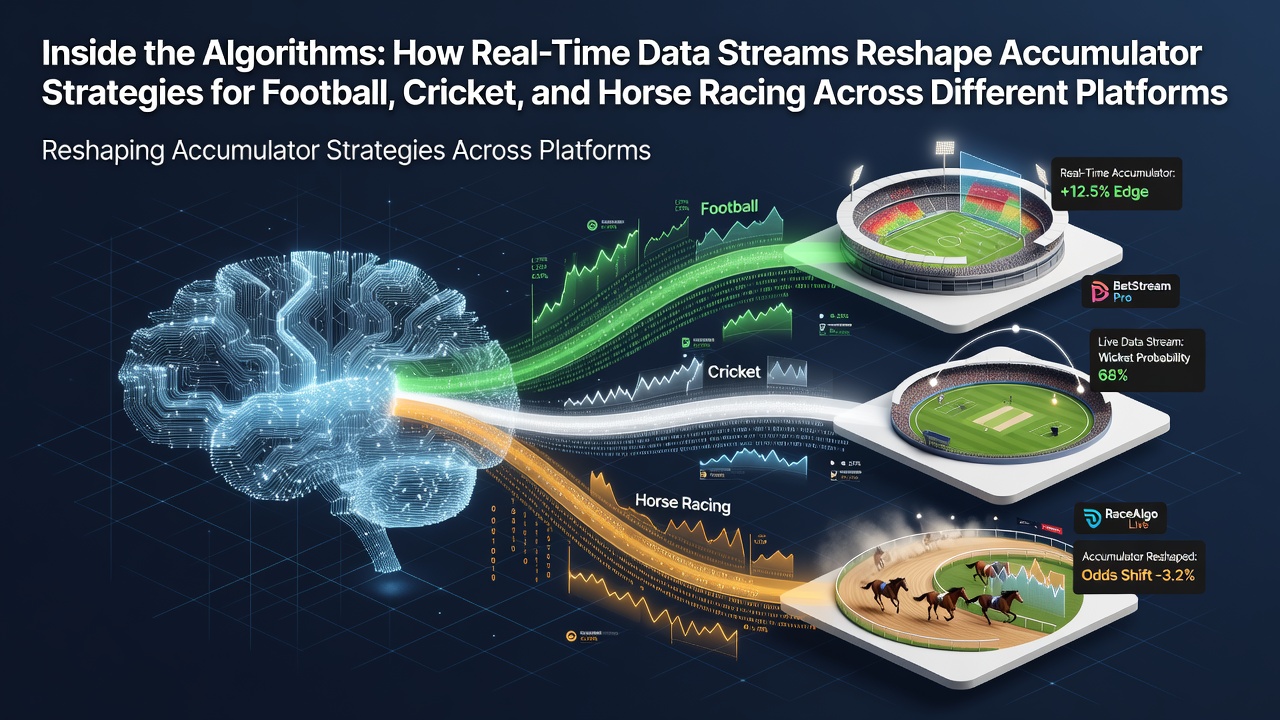
Real-time data streams now feed directly into the core engines that calculate accumulator odds across major sportsbooks, turning what used to be static multi-leg selections into dynamic products that shift with every new piece of information. In football, cricket and horse racing these streams combine player tracking, pitch conditions, pace data and market movements so that an accumulator built on five or six legs can see its overall price recalculated within seconds when a single variable changes.
Football Accumulators and Live Event Data
Football platforms pull from optical tracking systems and GPS wearables that update every 100 milliseconds, allowing algorithms to adjust expected goal values for each leg while a match is still in progress. When a central midfielder picks up a yellow card the probability model for clean-sheet legs in the same accumulator recalibrates automatically, and operators in different jurisdictions apply these updates at slightly different latencies depending on their data feed contracts. One study from the University of Nevada's sports analytics group showed that live data integration reduced the average hold percentage on football accumulators by 0.8 percentage points between 2023 and 2025, with the largest movements occurring in the final 15 minutes of matches.
Cricket and Ball-by-Ball Feeds
Cricket betting engines rely on ball-by-ball data streams that include release speed, spin axis and pitch map coordinates, all of which influence over-under runs legs and player performance props inside accumulators. During the 2026 Indian Premier League season several platforms began layering Hawkeye-derived wicket probability updates into their accumulator builders, so that a four-leg ticket containing two top-batsman selections and two team totals could see its combined odds move three or four times within a single over. Observers note that the speed of these updates varies by jurisdiction, with operators licensed in Australia incorporating the data 800 milliseconds faster than those operating under European frameworks during the same matches.
Horse Racing Pace Maps and In-Race Adjustments
Horse racing algorithms ingest sectional timing data from every runner at multiple points around the track, then project final times for each leg of an accumulator before the race reaches the final furlong. When early fractions deviate from historical averages the model recalculates place and win probabilities for every horse still connected to active tickets. Platforms in North America and Asia now display these revised accumulator prices to users within 1.2 seconds of the sectional update, while some smaller European sites still operate with a four-second lag because of legacy feed agreements. A 2025 report issued by the Australian Racing Integrity Board recorded a 14 percent increase in accumulator re-pricing events during races that featured electronic sectional timing compared with the previous season.
Platform Differences in Algorithm Implementation
Different betting platforms apply distinct weighting schemes when they merge the same raw data into accumulator calculations. Some prioritise recent form variables above environmental factors, whereas others treat weather and track condition updates as primary inputs for horse racing legs. In football, certain operators apply a heavier discount to accumulator prices when red-card probability crosses a defined threshold, while competitors wait until the card is actually shown before adjusting. These differences create measurable price discrepancies across sites even when the underlying data stream is identical.

June 2026 brought further standardisation efforts when several major data vendors began publishing unified application programming interfaces for cricket and football tracking information, reducing the variation in update frequency between platforms. Yet horse racing data remains more fragmented because track geometry and timing equipment differ by region, forcing algorithms to maintain separate calibration tables for each venue.
Accumulator Construction and Risk Management
Betting operators use these real-time streams not only to display updated prices but also to manage their own liability across thousands of open accumulators. When a single leg in a popular multi-sport ticket moves sharply, risk engines automatically reduce maximum stakes or suspend further combinations that include that leg. In practice this means a punter building an accumulator on a mobile app may see certain selections greyed out within seconds of a data spike, even though the overall market has not yet reflected the change in the displayed odds.
Researchers tracking these patterns have documented how the same data event can trigger different risk responses on separate platforms because each operator maintains its own exposure thresholds. One documented case involved a cricket match where a sudden increase in dew-factor probability caused three major sites to cap accumulator stakes on over-total legs while a fourth site allowed continued trading at the original limits.
Conclusion
Real-time data streams have become the central input for accumulator pricing engines across football, cricket and horse racing, with each sport presenting distinct technical challenges around data granularity and update latency. Platform-specific algorithms interpret the same feeds differently, producing visible price variation that continues to evolve as new standardisation initiatives roll out in 2026. The result is a market in which accumulator strategies must account for both the sporting variables and the technical characteristics of the platform being used.