Rain Delays and Revised Targets: How Weather Reshapes Cricket Live Odds
Rain Delays and Revised Targets: How Weather Reshapes Cricket Live Odds
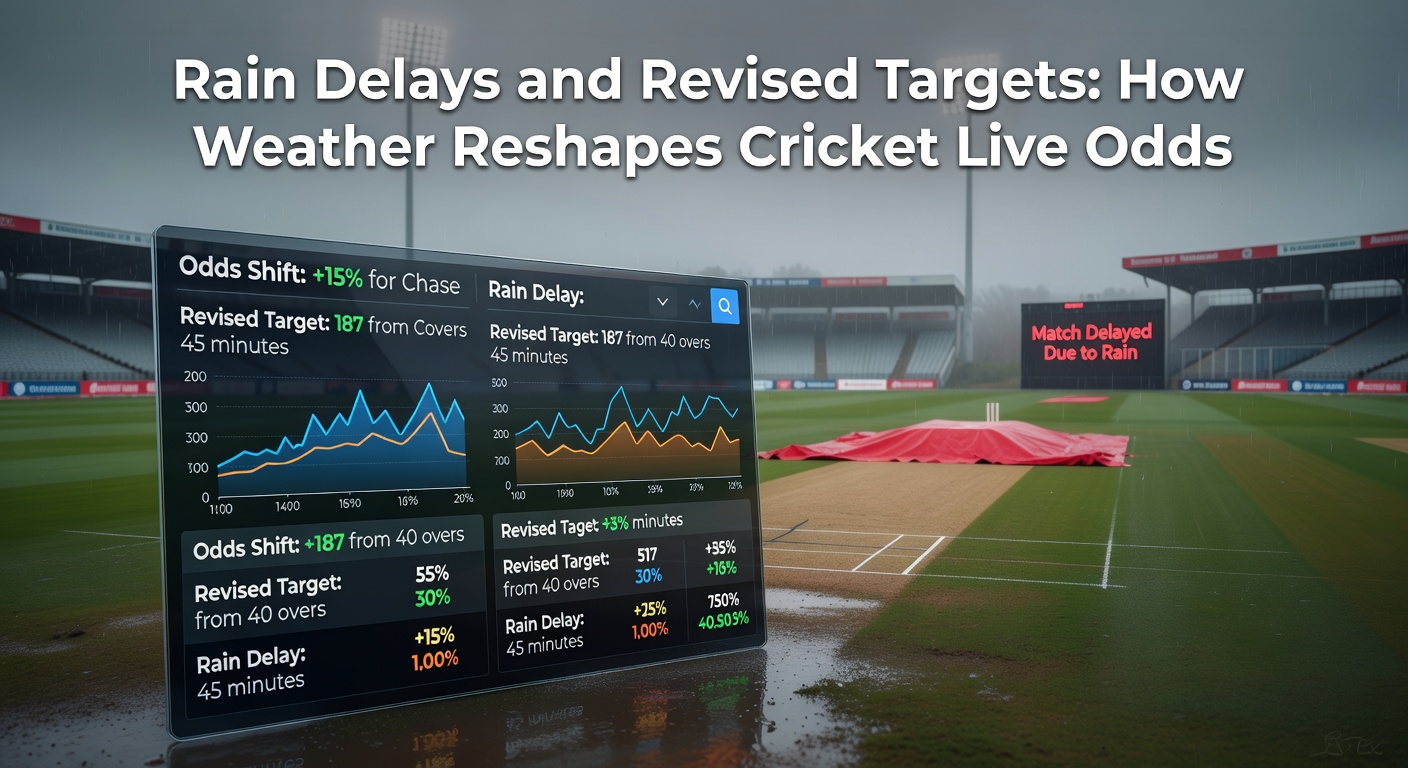
Cricket's Outdoor Drama Meets Mother Nature
Cricket thrives as an outdoor sport played across formats like Test matches, One-Dayers, and T20 blasts, yet weather—particularly rain—throws constant curveballs that force umpires to halt play, roll out covers, and rethink entire games; observers note how these interruptions ripple straight through to live betting markets, where odds shift dramatically in seconds as bookmakers recalibrate based on revised scenarios. Data from the International Cricket Council (ICC) playing conditions reveals that rain accounts for over 20% of match interruptions in limited-overs cricket during monsoon-prone seasons, turning what starts as a straightforward punting opportunity into a high-stakes game of prediction and adaptation.
But here's the thing: while fans huddle under umbrellas and grounds staff sprint with sheets, live odds platforms buzz with activity as algorithms and traders digest new probabilities; for instance, a team cruising at 150/2 after 20 overs suddenly faces a downpour, prompting odds on the match winner to flip almost instantly from 1.50 to 2.80 if the batting side loses overs. Experts who've tracked these events over seasons point out that such volatility spikes trading volumes by up to 40%, according to figures from global betting exchanges.
And in March 2026, as the IPL kicks into high gear across Indian stadiums notorious for pre-monsoon showers, bettors already witness this firsthand; take the Mumbai Indians versus Chennai Super Kings clash on March 15, where a 90-minute delay slashed the second innings target via the Duckworth-Lewis-Stern (DLS) method, reshaping top batsman markets overnight.
How Rain Delays Unfold on the Field
Rain doesn't just pause the clock in cricket; it compresses timelines, reduces overs, and alters strategies since umpires invoke reserve days or abandon play altogether if conditions worsen, but most often they apply DLS to set fair revised targets that account for lost time. Groundsmen deploy massive covers within minutes of the first drops—sometimes before players even retreat—while hawk-eye systems and rain radars help officials forecast resumption; research from the International Betting Integrity Association (IBIA) indicates that in T20 internationals, average delays last 45 minutes, yet they extend matches by hours through super overs or tiebreakers when full resumption proves impossible.
Take one notable case from the 2023 ODI World Cup, where South Africa chased a rain-adjusted 251 off 44 overs against Australia, only for odds on their victory to plummet from 3.00 to 1.75 as the target tightened; players adapt too, with aggressive batting replacing steady accumulation since fewer overs demand quicker scoring rates, and this shift fuels odds on player performances like six-hitting props that balloon during uncertainty.
What's interesting is how deluges cluster in specific venues—think Lord's in London or the Gabba in Brisbane during summer storms—where historical data shows rain altering outcomes in 15% of fixtures, prompting bookies to bake in weather premiums even pre-match.
Decoding the Duckworth-Lewis-Stern Method
At the heart of rain-affected chases lies the DLS system, a statistical model devised by Tony Lewis, Steve Stern, and Frank Duckworth to recalibrate targets based on overs lost and wickets remaining, ensuring the second innings mirrors the first's difficulty; it factors resources like batting depth via parabolic curves, so a team at 100/1 after 15 overs in a rain-hit 30-over game might defend a par score of 180, whereas pre-rain projections sat at 220 off 50. Studies from Australian universities confirm DLS accuracy hovers around 95% in simulations, although critics highlight edge cases like early collapses where it overcompensates.
Now picture this: umpires announce a revised target mid-delay, and live odds explode—over/under runs markets swing wildly since DLS compresses totals, while match outrights recalibrate on the chasing team's revised run rate needs; one study revealed that post-DLS announcements trigger a 25% average odds movement in under 60 seconds across major platforms.
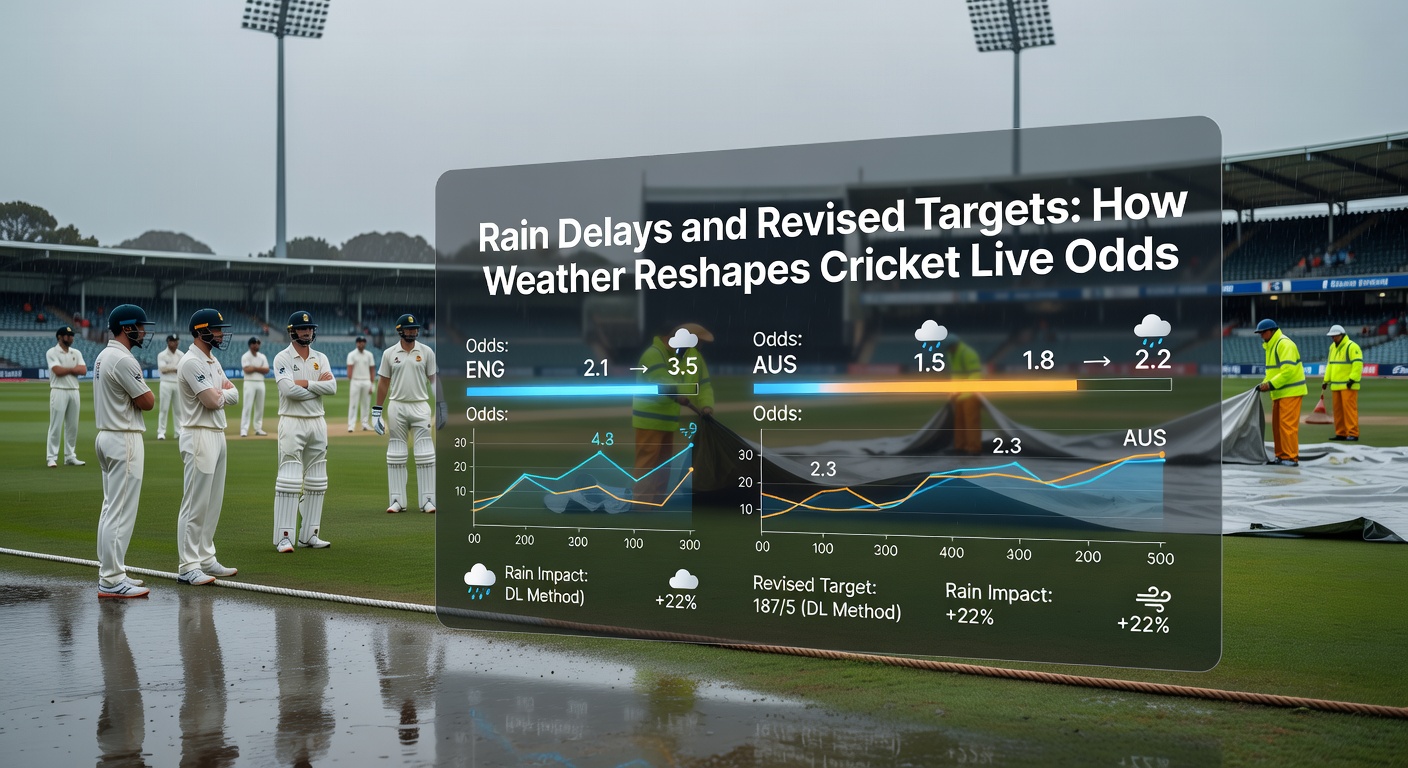
Yet deluges don't discriminate by format; T20s suffer shortest delays but sharpest odds pivots because high-scoring chases amplify percentage changes, and in March 2026's packed IPL schedule, fans recall how a Lucknow Super Giants game saw their target drop from 190 to 162 after 4 overs lost, flipping odds from 2.20 underdogs to 1.65 favorites.
Bookmakers' High-Tech Response to the Skies
Live odds reshape through a blend of human traders and AI models that ingest radar feeds, historical weather data, and pitch reports in real-time, adjusting lines faster than a spinner turns the ball; platforms like Betfair and Pinnacle deploy proprietary algorithms trained on thousands of rain-affected games, where odds on session runs might leap from evens to 3.50 if resumption looks dicey. Data indicates these systems process DLS inputs within milliseconds, balancing liquidity as sharp bettors pile into value spots before markets stabilize.
But here's where it gets interesting: player-specific markets face the biggest hits since rain alters workloads—bowlers gain swing in damp conditions, boosting anytime wicket odds, while batsmen eye accelerated props; observers track how, in a 2024 Big Bash League match, rain-shortened to 14 overs saw six-hitting odds for Glenn Maxwell shorten from 4.00 to 2.25 upon resumption signals.
And don't overlook in-play totals: over/under lines recalibrate downward with overs lost, yet humidity often keeps scores competitive, creating edges for those monitoring barometers alongside odds feeds; figures from exchange volumes show rain events double turnover on these markets alone.
Real-World Case Studies from the Pitch
Examine the 2019 World Cup semi-final between India and New Zealand, where relentless rain invoked DLS repeatedly, revising India's chase to 241 off 47.3 overs and sending shockwaves through live odds—India's price ballooned to 1.90 pre-adjustment before settling at 1.40, with volumes hitting record highs. Teams like New Zealand capitalized on bowling first in forecasts, a tactic now standard when apps predict 30% precipitation.
Closer to now, March 2026's Border-Gavaskar Trophy Test in Perth saw Day 3 washed out entirely, scrapping session betting but inflating Day 4 outrights as draws lengthened from 15% to 45%; punters who hedged early cleaned up when covers stayed on longer than expected.
- In T20s, like the 2025 Women's World Cup qualifier, a 2-hour delay in Delhi compressed Australia’s defense to 110 off 16 overs, flipping underdog Bangladesh odds from 5.50 to 2.80.
- ODIs witness broader swings; England's 2023 chase versus Sri Lanka adjusted to 182 off 38 overs, where live top scorer markets pivoted on Joe Root's form amid drizzle.
- Tests drag longest—rain at Eden Gardens in 2024 paused India-Australia for 6 hours, reshaping draw no bet lines overnight.
These examples underscore patterns: rain favors chasing sides in white-ball cricket 62% of the time per Cricinfo stats, tilting odds accordingly and rewarding weather-savvy bettors.
Navigating the Forecast in Live Markets
While bookies lead with tech, external factors like wind aiding swing or sun drying pitches post-rain add layers; apps from AccuWeather integrate with betting sites now, feeding punters the same data traders use, so odds on ball-by-ball outcomes tighten as clouds part. Research highlights that pre-delay hedging—say, laying the favorite at 1.70—yields edges when DLS looms, although liquidity thins during blackouts.
So as March 2026 unfolds with IPL storms brewing, those glued to radar alongside streams spot value in volatile windows; it's no coincidence volumes peak 30 minutes pre-resumption, when whispers of full overs lost circulate.
Turns out, weather doesn't just delay cricket—it redefines the odds game entirely, blending unpredictability with precision math.
Conclusion
Rain delays and DLS revisions stand as cricket's ultimate disruptors, forcing live odds to dance with every drop and announcement while bookmakers harness data to keep markets fair and fluid; from IPL showdowns in March 2026 to historic World Cup thrillers, these events showcase how weather turns static pre-match lines into dynamic battlegrounds, where historical stats, real-time tech, and tactical shifts converge. Observers who study the beat know this much: in cricket betting, the skies hold as much sway as the scoreboard, ensuring no two rain-lashed games—or their odds—ever play out quite the same.